
Mindset and leadership first
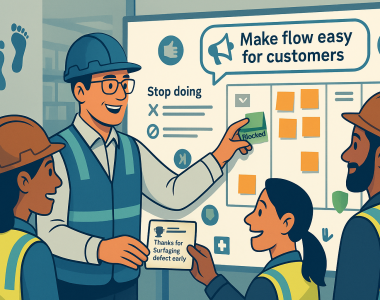
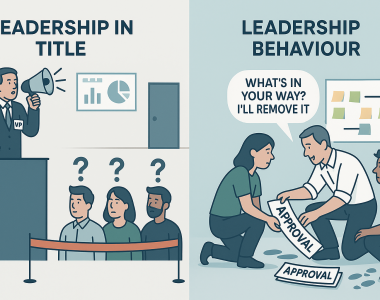
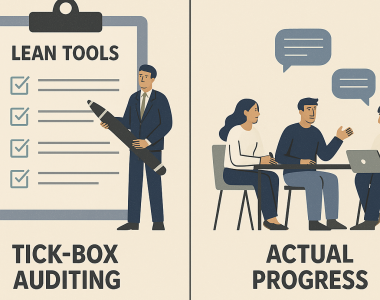
Continuous improvement is a way of working. Tools help, but people and habits decide outcomes. Leadership sets the tone by showing up where the work happens, asking better questions, and creating space. The state of mind is simple. see value through the eyes of the customer, make problems visible, run small experiments, and lock in what works. With that mindset in place the tools below become powerful and safe to scale.
PDCA, the origin and why it still matters
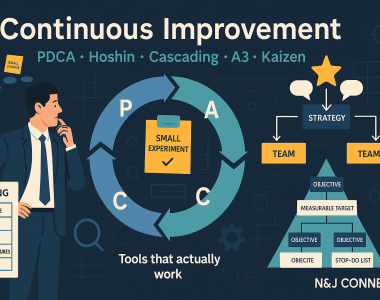
Plan Do Check Act sits at the heart of modern quality and Lean. The roots go back to Shewhart’s scientific cycle in the nineteen thirties and to Deming who popularized the loop after the war. The idea is disarmingly simple. start with a clear aim, try a small change, compare what happened with what you expected, and adjust. In a busy operation PDCA protects you from two common errors. jumping to solutions without understanding the problem, and celebrating results that you cannot repeat. Treat PDCA as the default rhythm for every improvement, from a five minute test at a workstation to a multi month system change.
Hoshin Kanri, from strategy to daily improvement
Hoshin Kanri is strategy deployment with discipline. Leadership sets a small number of breakthrough priorities and measurable annual targets. Teams translate those into local challenges and experiments. The magic is the dialogue between levels, often called catchall, where assumptions are tested both ways until objectives and means fit the real world. Used well, Hoshin prevents the common split between PowerPoint strategy and shop floor reality. It aligns improvement efforts, keeps focus when everything feels urgent, and gives every team a line of sight from their experiment to the customer promise.
Cascading goals, reaching clarity without bureaucracy
Cascading is the practical side of Hoshin. It means every team can state in one sentence what success this quarter looks like, how they will measure it, and what they will stop doing to create capacity. Good cascading is not top down orders. It is a short conversation that balances ambition with feasibility and checks that metrics are few, visible, and within the team’s control. Done this way cascading reduces noise, speeds up decisions, and makes it obvious when an improvement does not contribute to a shared goal.
A3, problem solving on a single page
The A3 is not a template. It is a way to force clear thinking on a single sheet. Current state, target condition, analysis of causes, countermeasures, plan, follow up, and learning. Writing the story is where the value sits because it exposes leaps of faith and missing facts. In practice an A3 speeds up teaching. leaders can coach by asking for the next right detail, and teams can review progress in minutes because the whole story fits on the table. Use A3s when a problem is too complex for a quick fix and when learning needs to be shared.
Kaizen, small steps with real impact
Kaizen means change for the better through many small steps. In daily work this looks like micro experiments that remove friction, shorten waiting, and simplify checks. The power of Kaizen is compounding. one small win per person per week transforms a department within a quarter. The risk is theatre. busy boards and photos of tidy areas without a change in flow. Keep Kaizen honest by tying each experiment to a clear problem, checking the result, and updating the standard so the gain does not fade.
When to use which tool
Use PDCA everywhere as the thinking pattern. Use Hoshin when you need to align many teams on a few priorities and avoid scatter. Use cascading to turn those priorities into team level targets and capacity choices. Use A3s for problems that require analysis and cross functional alignment. Use Kaizen for the daily grind of removing small obstacles. Together they form a system. strategy tells you what matters, cascading makes it local, PDCA gives you the rhythm, A3 structures the learning, and Kaizen keeps momentum high.
Tools matter but mindset decides
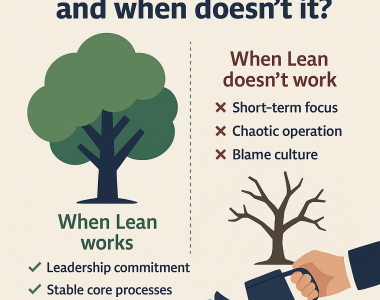
Each of these tools can deliver serious results, but only when the state of mind is right. Presence at the work, respect for people, and the courage to run small tests turn tools into a system that delivers flow, quality, and reliability. Without that mindset, tools become ceremonies that look good and change little. With it, continuous improvement becomes the normal setting of the organization.
N&J Connect supports your entrepreneurship as equals and solves your quest for the best Supply Chain possible. Let’s Connect!