NJ beeldmerk

Logistics Engineer

Logistics Engineer role

As a Logistics Engineer, you can expect a full-time role focused on the analysis, design, and improvement of logistics processes. Depending on the assignment, you may work on strategic network optimization, warehouse automation, or the implementation of data-driven systems. Roles are available on both a permanent and interim basis, typically within fast-paced warehouse, distribution, or supply chain environments.

Salary, Contract & Conditions

As a Logistics Engineer, youโ€™ll play a key role in optimizing logistics networks, improving operational efficiency, and implementing data-driven solutions. Assignments may focus on warehouse design, automation, transport optimization or digital transformation.

Salary or hourly rate (indicative):

  • Permanent position: โ‚ฌ3,200 โ€“ โ‚ฌ4,800 gross per month
  • Freelance / Interim: โ‚ฌ60 โ€“ โ‚ฌ85 per hour (depending on project and experience)

Contract types:

  • Full-time positions, either permanent or interim
  • Hybrid or on-site work options depending on the client

Additional benefits may include:

  • Training budget for technical certifications
  • Travel expenses or remote working compensation
  • Company laptop and tools for system access
  • Option to work on cutting-edge implementation projects

Skills & Competencies

NJ beeldmerk

Process Improvement & Optimization

  • Network design: create efficient warehouse and transport networks
  • Layout engineering: optimize warehouse space and flow
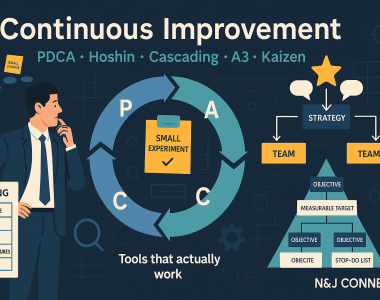
  • Lean methods: apply continuous improvement techniques across operations

NJ beeldmerk

Data-Driven Analysis

  • Simulation & modeling: use software like AutoMod, FlexSim or Excel VBA
  • KPI monitoring: track and improve throughput, lead times and utilization
  • Reporting tools: build dashboards and data visualizations (e.g. Power BI)

NJ beeldmerk

Change Implementation

  • Stakeholder alignment: bridge operations and technical teams
  • Project management: coordinate improvement or automation initiatives
  • System integration: implement or support WMS/TMS/ERP rollouts

What does a logistics engineer do?

A Day in the Life of a Logistics Engineer

08:30 โ€“ You start the day with a quick coffee and log into the WMS dashboard. Overnight data has come in, and you notice a bottleneck in the outbound flow: picking times were 17% higher than expected. Time to dig deeper.

09:15 โ€“ You meet with the warehouse supervisor and the shift lead to understand what happened on the floor. A temporary aisle closure caused delays. Together, you sketch a workaround and note down ideas for structural improvement.

10:30 โ€“ Back at your desk, you open your simulation model in FlexSim. You test three layout changes and one additional AGV scenario. By lunch, youโ€™ve already identified a solution that reduces travel time by 12%.

13:30 โ€“ After lunch, itโ€™s time for a cross-functional project meeting. You present your findings to IT, operations and planning. Everyone agrees on a pilot rollout next month.

15:00 โ€“ You update your project dashboard and prepare a short improvement report for management. Before the day ends, you answer a support call from another site, they want your input on a new buffer zone design.

17:00 โ€“ You close your laptop. Another day of making the logistics engine run smarter.

Is this your next logistics job?

Do you get excited when a process runs just a little smoother? Do you enjoy finding the one tweak that saves time, cuts cost, or reduces errors,ย  and then scaling it across the operation? As a Logistics Engineer, you donโ€™t just follow the flow: you design it.

This role is made for people who see patterns in data, opportunities in bottlenecks, and satisfaction in smart execution. Whether you’re improving a layout, adjusting lead times, or building a Power BI dashboard, your work has a direct impact on how things move, how people work, and how fast customers are served.

Education & Career Development

Most logistics engineers hold a technical degree and have a strong analytical background. Employers often look for:

Education & experience:

  • Bachelorโ€™s or Masterโ€™s degree in Logistics, Industrial Engineering, Supply Chain or related field
  • 2+ years of experience in a logistics or manufacturing environment
  • Familiarity with simulation tools and continuous improvement frameworks (Lean/Six Sigma)

Development opportunities:

  • Grow into roles like Senior Engineer, Process Lead or Project Manager
  • Work on large-scale digital transformation projects
  • Specialize in niche areas like automation, robotics, or green logistics
  • Access to mentoring, certifications, and in-house innovation programs

Want to know what our customers say?

Want to know more?

Fill out our form.
Or give us a call:โ€‹ +31652421238

Logistics engineer FAQ

  • What is a primary responsibility of a Logistics Engineer in supply chain design?

    They analyze and design the overall supply chain network to optimize the flow of materials and goods, ensuring efficiency and cost-effectiveness.

  • How does a Logistics Engineer contribute to warehouse operations?

    They design warehouse layouts, implement storage solutions, and improve picking and packing processes to maximize space utilization and operational throughput.

  • What role does data analysis play for a Logistics Engineer?

    They use data analysis to model logistics processes, identify bottlenecks, and support decisions with quantitative evidence for continuous improvement.

  • Why are problem-solving skills critical for a Logistics Engineer?

    They are essential for diagnosing inefficiencies within complex supply chains and developing effective, practical solutions to resolve them.

  • How can connecting with N&J lead to Logistics Engineer opportunities?

    It provides direct access to specialized recruitment consultants who have exclusive roles and insights into the logistics engineering job market.