Logistics Engineer
Logistics Engineer role
As a Logistics Engineer, you can expect a full-time role focused on the analysis, design, and improvement of logistics processes. Depending on the assignment, you may work on strategic network optimization, warehouse automation, or the implementation of data-driven systems. Roles are available on both a permanent and interim basis, typically within fast-paced warehouse, distribution, or supply chain environments.
Salary, Contract & Conditions
As a Logistics Engineer, youโll play a key role in optimizing logistics networks, improving operational efficiency, and implementing data-driven solutions. Assignments may focus on warehouse design, automation, transport optimization or digital transformation.
Salary or hourly rate (indicative):
- Permanent position: โฌ3,200 โ โฌ4,800 gross per month
- Freelance / Interim: โฌ60 โ โฌ85 per hour (depending on project and experience)
Contract types:
- Full-time positions, either permanent or interim
- Hybrid or on-site work options depending on the client
Additional benefits may include:
- Training budget for technical certifications
- Travel expenses or remote working compensation
- Company laptop and tools for system access
- Option to work on cutting-edge implementation projects
Skills & Competencies

Process Improvement & Optimization
- Network design: create efficient warehouse and transport networks
- Layout engineering: optimize warehouse space and flow
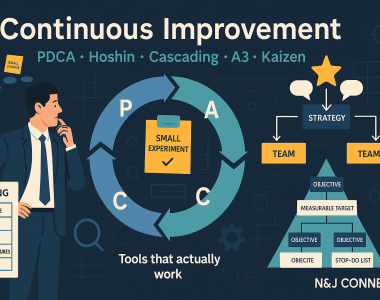
- Lean methods: apply continuous improvement techniques across operations

Data-Driven Analysis
- Simulation & modeling: use software like AutoMod, FlexSim or Excel VBA
- KPI monitoring: track and improve throughput, lead times and utilization
- Reporting tools: build dashboards and data visualizations (e.g. Power BI)

Change Implementation
- Stakeholder alignment: bridge operations and technical teams
- Project management: coordinate improvement or automation initiatives
- System integration: implement or support WMS/TMS/ERP rollouts
What does a logistics engineer do?
A Day in the Life of a Logistics Engineer
08:30 โ You start the day with a quick coffee and log into the WMS dashboard. Overnight data has come in, and you notice a bottleneck in the outbound flow: picking times were 17% higher than expected. Time to dig deeper.
09:15 โ You meet with the warehouse supervisor and the shift lead to understand what happened on the floor. A temporary aisle closure caused delays. Together, you sketch a workaround and note down ideas for structural improvement.
10:30 โ Back at your desk, you open your simulation model in FlexSim. You test three layout changes and one additional AGV scenario. By lunch, youโve already identified a solution that reduces travel time by 12%.
13:30 โ After lunch, itโs time for a cross-functional project meeting. You present your findings to IT, operations and planning. Everyone agrees on a pilot rollout next month.
15:00 โ You update your project dashboard and prepare a short improvement report for management. Before the day ends, you answer a support call from another site, they want your input on a new buffer zone design.
17:00 โ You close your laptop. Another day of making the logistics engine run smarter.
Is this your next logistics job?
Do you get excited when a process runs just a little smoother? Do you enjoy finding the one tweak that saves time, cuts cost, or reduces errors,ย and then scaling it across the operation? As a Logistics Engineer, you donโt just follow the flow: you design it.
This role is made for people who see patterns in data, opportunities in bottlenecks, and satisfaction in smart execution. Whether you’re improving a layout, adjusting lead times, or building a Power BI dashboard, your work has a direct impact on how things move, how people work, and how fast customers are served.
Education & Career Development
Most logistics engineers hold a technical degree and have a strong analytical background. Employers often look for:
Education & experience:
- Bachelorโs or Masterโs degree in Logistics, Industrial Engineering, Supply Chain or related field
- 2+ years of experience in a logistics or manufacturing environment
- Familiarity with simulation tools and continuous improvement frameworks (Lean/Six Sigma)
Development opportunities:
- Grow into roles like Senior Engineer, Process Lead or Project Manager
- Work on large-scale digital transformation projects
- Specialize in niche areas like automation, robotics, or green logistics
- Access to mentoring, certifications, and in-house innovation programs

Want to know what our customers say?
Want to know more?
Fill out our form.
Or give us a call:โ +31652421238
Logistics engineer FAQ
What is a primary responsibility of a Logistics Engineer in supply chain design?
They analyze and design the overall supply chain network to optimize the flow of materials and goods, ensuring efficiency and cost-effectiveness.
How does a Logistics Engineer contribute to warehouse operations?
They design warehouse layouts, implement storage solutions, and improve picking and packing processes to maximize space utilization and operational throughput.
What role does data analysis play for a Logistics Engineer?
They use data analysis to model logistics processes, identify bottlenecks, and support decisions with quantitative evidence for continuous improvement.
Why are problem-solving skills critical for a Logistics Engineer?
They are essential for diagnosing inefficiencies within complex supply chains and developing effective, practical solutions to resolve them.
How can connecting with N&J lead to Logistics Engineer opportunities?
It provides direct access to specialized recruitment consultants who have exclusive roles and insights into the logistics engineering job market.