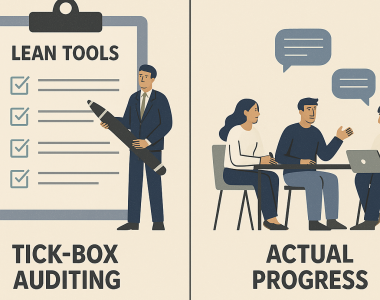

In the previous article, we explored Lean models and tools like 5S, Kanban, and Value Stream Mapping and how they can either spark real improvement or sink into the swamp of “tick-box Lean.”
But here’s the uncomfortable truth: even if you have the right tools and the right mindset, Lean will still fail if the environment isn’t ready.
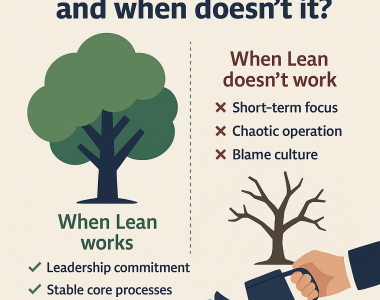
Lean is not a universal “plug & play” system. It’s not a magic wand you wave over chaos. It’s a discipline, a culture, and a long-term strategy. Just like planting and nurturing a tree, it needs the right soil, the right climate, the right nutrition and ongoing care.
Many Lean failures aren’t caused by Lean itself. They’re caused by poor timing, wrong conditions, or unrealistic expectations. Let’s look at when Lean works and when it’s best to wait.
When Lean works
- Leadership commitment
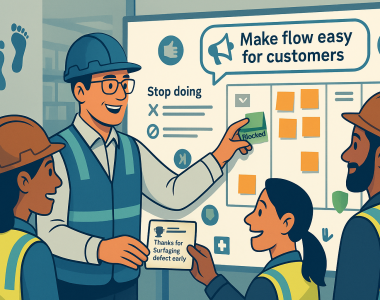
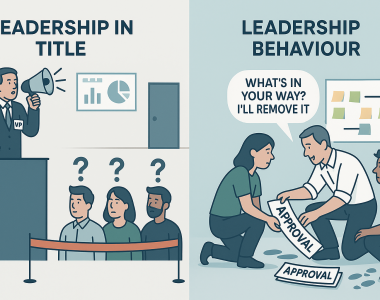
Lean thrives when leaders are not only on board but actively involved. It’s the CEO joining a Gemba walk, asking “What’s getting in your way?” and then removing that obstacle. It’s directors showing up in improvement sessions – not to inspect, but to learn.
- Stable long-term commitment
The Board of Chiefs holds the ultimate responsibility. Lean is a multi-year journey, not a quarterly initiative. Without long-term sponsorship, teams will revert to old habits the moment budgets tighten or leadership changes.
- Stable core processes
You can’t improve chaos. Lean works when you have a baseline level of stability, predictable demand, consistent quality and processes that repeat to a certain extend. When there is chaos, fix that first.
- Culture of openness
Problems are surfaced, not hidden. People feel safe to say “this isn’t working” without worrying about being blamed or talking to walls.
- Customer focus
Lean success comes when decisions are made through one lens: does this add value for the customer? That focus keeps improvement from turning into internal navel-gazing.
When Lean Doesn’t Work (Yet)
Sometimes, the conditions simply aren’t right for Lean to take root. Common failure patterns include:
- Leadership in name only
Leaders endorse Lean in speeches, but keep running the business the same old way. The message to the organization is clear: this is just a side project.
- Short-term obsession
The board wants quarterly wins, quick cost cuts, or flashy KPIs instead of building long-term capability. As soon as the numbers dip, Lean gets cut.
- Toxic blame culture
Problems are avoided, hidden, or pinned on someone else. Improvement dies when people fear the consequences of speaking up.
- Chaotic operations
No stable processes, no predictable demand, firefighting every day. Adding Lean tools here only makes the chaos more visible, it doesn’t fix it. Visibility aboudt what is happening, could be a good outcome. But then Lean should be implemented on corresponding merits.
- Lip-service to change
People nod in workshops, but no one actually changes daily routines. Meetings stay the same, decisions stay top-down, and Lean becomes an “event,” not a habit.
In these environments, Lean tools will not fix the root issues. They will just provide colourful charts and tidy workstations while nothing meaningful improves.
The Lean Readiness Check
Before launching Lean, every leader and every team should ask themselves:
- Is leadership willing to learn, not just sponsor?
- Is the Board prepared for a multi-year commitment?
- Are our processes stable enough to improve?
- Is there trust and openness?
- Do we measure what matters to the customer?
- Am I willing to change my own behaviour—and ask my colleagues to do the same?
If the answer to most of these or any is “no,” then Lean will probably feel like pushing a rope. It’s not that Lean can’t work. The right conditions need to be created first.
Why Readiness Matters
Without readiness to change, Lean will be seen as “just another management fad” and quietly fade away. But with readiness, it becomes a force multiplier making your people faster, smarter, and more collaborative.
Readiness is not just about tools or training; it’s about mindset and behaviour. If leaders are not prepared to lead differently by listening more, asking better questions, and giving up control then no amount of Kanban boards will help.
“I can fix this myself in a day the way we’ve always done it. But if I let my team fix it and it takes a week, they’ll know how to prevent it forever. That’s the choice between winning today or winning for years.”
Being the essence of readiness: the willingnes to trade short-term convenience for long-term transformation.
Next up: Even when the conditions are perfect, any transformation -Lean or otherwise- can fail without the right change management. In the next article, we’ll uncover why change efforts so often fall short, and how to stack the odds in your favour.